Product

1
img

Product Overview

Our UAV-based intelligent monitoring system aims to overcome the major limitations of traditional red tide monitoring by providing breakthroughs in speed, automation, accuracy, and predictive capability. Unlike traditional methods that rely on slow manual sampling and laboratory analysis, our monitoring system takes only under one hour to complete the entire process from sampling to analysis, saving more than 90% of operational time.

In addition, the system is extremely easy to use. The entire monitoring process is fully autonomous, with preset flight paths and automatic water sample collection. Because the system does not necessitate any technical knowledge to operate, it can be easily used by a wide range of users, from environmental agencies to aquaculture farmers.

Accuracy and predictability are also distinguishing factors of the product. The AI model, trained on past harmful algal bloom records and combined with real-time chemical measurements of the water samples, can detect early signs and predict the occurrence of blooms with an accuracy rate of over 70%. Rather than simply detecting algal blooms after they appear, the system gives users time in advance to implement preventive measures.

The product also offers high cost-effectiveness and scalability. Each monitoring mission costs less than $10, making its operation economically feasible even at a high rate of monitoring. In addition, as more data about global algal blooms is gathered, the accuracy of the system's prediction grows continuously, due to its machine learning algorithm. Together, these factors make this product a practical solution for sustainable protection against harmful algal blooms.
Drone
Controller
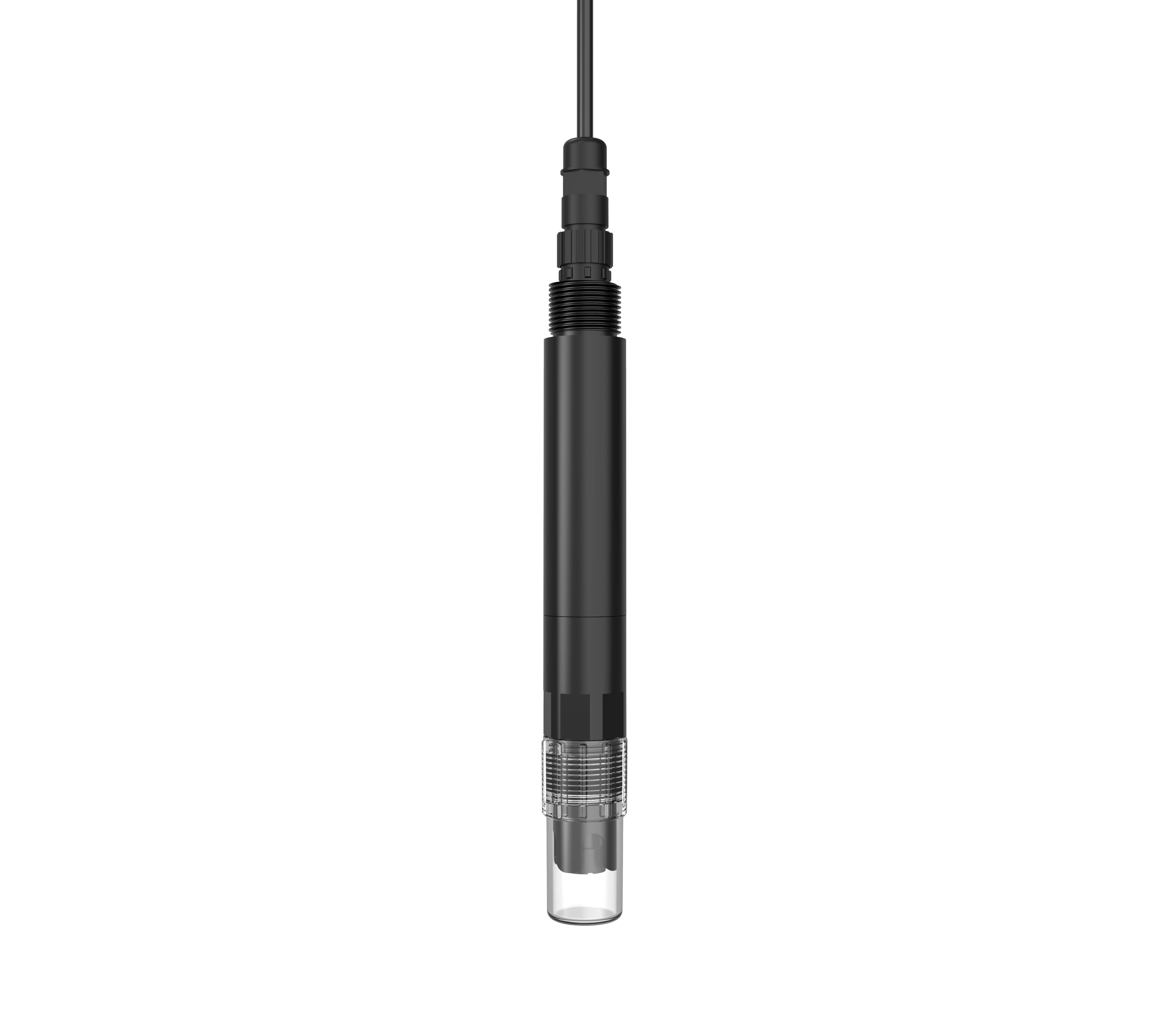
Detection Rod
Loading Model...
Mouse Drag: Rotate View
Mouse Wheel: Zoom In/Out


Core components & technology

UAV platform

UAV Platform

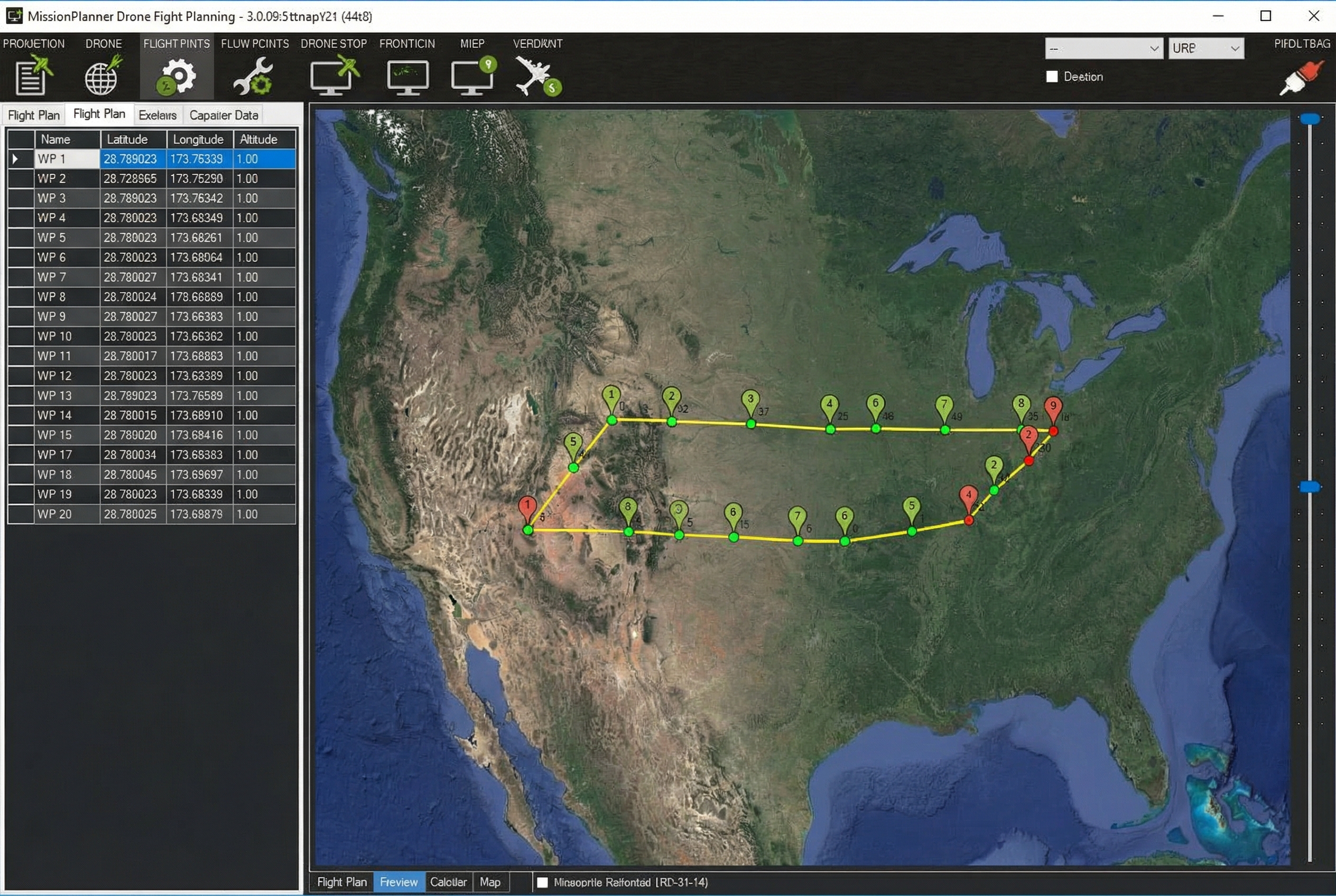
The core of the system is an intelligent, autonomous UAV platform, built for low altitude monitoring of water bodies. The UAV integrates a flight controller with a ground station software, by which users can preset flight routes, altitudes, and sampling points with high precision. This reduces the device’s dependency on trained operators while allowing greater coverage within a single mission.

Water collection and sensing

Sampling Module

A major technological component of the system is the water sampling module integrated into the UAV. Traditional methods typically use manual sampling or fixed stations. However, this product features a lightweight motor-reel system controlled by an onboard microcontroller raspberry pi. The sampling bottle has a dual-hole design, consisting of a water inlet and an air vent. This way, water pressure will allow the intake of water once the bottle is submerged, while leakage during retrieval is largely prevented.

In addition to the sampling equipment, the system also contains a water quality sensing module. After collection of the water sample, the system measures parameters that have correlations to the occurrence of algal blooms, including Chlorophyll, Ammonia Nitrogen, dissolved oxygen, salt concentration, pH, and temperature. The sensors communicate through an RS485 interface that can withstand environmental interference and ensure stable data transfer.

AI prediction system

Sensing Module

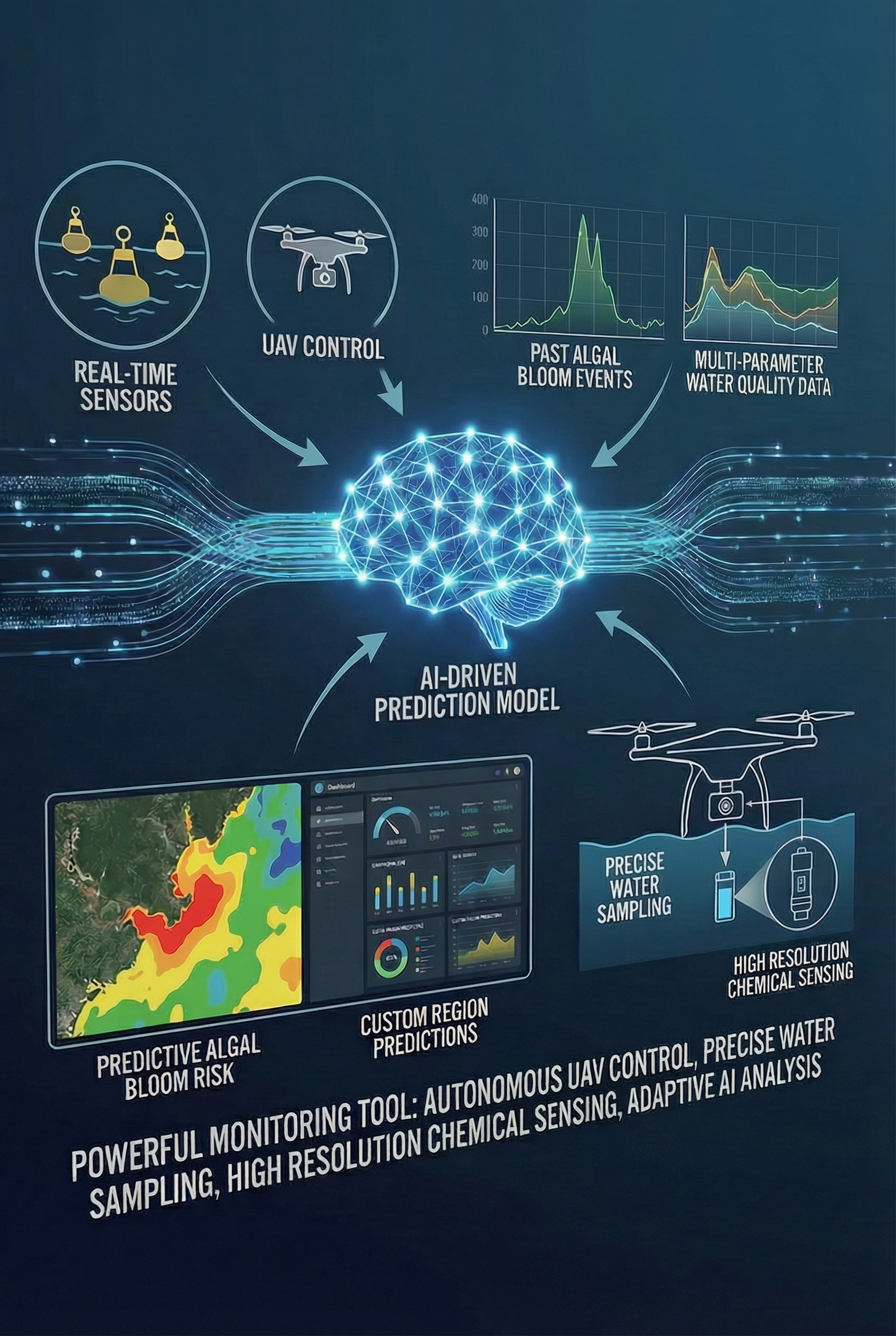
The analytical core of the system is an AI-driven prediction model trained on past algal bloom events and multi-parameter water quality data. By analyzing real-time readings from sensors, the model can detect warning signs that conventional methods often cannot recognize. Additionally, the AI system continually improves with each new mission data entered into the system and can be customized to more accurately produce predictions of specific water regions.

Together, these core technologies, including autonomous UAV control, precise water sampling, high resolution chemical sensing, and adaptive AI analysis, forms a powerful monitoring tool. In addition to providing detection capabilities after an event has already occurred, this product can also produce predictions, supporting proactive management of algal bloom.

Price comparison

Monitoring Method Upfront Cost Annual Cost Detection Speed Staff Required Cost per Monitoring Event Coverage Area Key Economic Limitations
Manual Water Sampling ~$25,000
(boats, sampling gear, lab equipment)
~$120,000/year
(labor, fuel, lab analysis)
Days to weeks 4–6 technicians ~$10,000–$15,000 Local, point-based High labor cost, slow response increases economic damage
Satellite Monitoring ~$40,000
(data setup, software licenses)
~$80,000/year
(subscriptions, analysts)
2–5 days 2–3 analysts ~$8,000–$12,000 Regional, limited near shore Poor coastal resolution, delayed confirmation
Fixed Sensor Buoys ~$200,000 per buoy
(per unit)
~$60,000/year
(maintenance, calibration)
12–24 hours 2–3 technicians ~$6,000–$8,000 Fixed location only High capital cost, low spatial flexibility
Our UAV + AI System ~$3,000
(single UAV unit)
~$3,600/year
(maintenance, software, cloud AI)
<1 hours 1 operator <$10 Mobile, targeted coastal zones Requires UAV deployment and weather windows

The UAV-based monitoring system offers a clear advantage over existing red tide monitoring methods in terms of cost.

Conventional manual sampling involves the usage of boats, trained personnel, and laboratory analysis, thereby involving high upfront costs and recurring annual maintenance costs. Typically, such system can cost over $25,000 to install, with operational costs of around $120,000 per year. Each monitoring event can cost between $10,000 and $15,000, mainly due to the cost of labor and boat usage, with the time taken for detection ranging from days to weeks.

Satellite monitoring reduces the cost for labor but includes other expenses. Typically, the initial cost for data setup and software licensing may be around $40,000, with an annual expense for analysis of around $80,000. Satellites can cover large areas, but it presents a limitation in resolution for areas near shorelines. Therefore, days may be needed to confirm bloom occurrence. This system typically cost about $8,000 - $12,000 per event.

Fixed sensor buoys are characterized by extremely high start-up costs even though they can provide continuous data. The installation cost of each buoy is estimated at $200,000, with an annual cost of around $60,000 for maintenance and calibration. Though they have high speeds for identification, they are location bound, which means limited coverage, and costs for each monitoring remain in thousands per site.

​​In contrast, this UAV and AI based monitoring system initially costs approximately $3,000 per UAV unit, with ongoing annual costs for maintenance, software, and cloud-based AI services of around $3,600. The cost of performing each monitoring mission is less than $10, an incredibly low amount compared to any other traditional method. This system only needs one person to attend without requiring expertise, and it offers mobile and targeted coverage for both coastal and inland water bodies. Though the element of weather may need to be considered for UAV deployment, overall, it is one of the most affordable and scalable solutions for continuous monitoring of red tides.